How Can Social Media Be Used as Evidence in Criminal Trials?
May 28, 2026
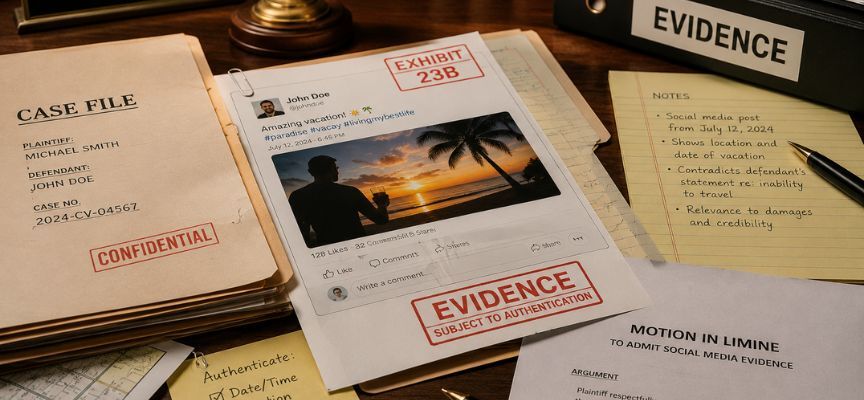
Social media has become a central part of many criminal trials, particularly in cases involving harassment, threats, and assault charges. In today’s digital age, what individuals post online can have serious consequences in a courtroom.
While social media platforms like Facebook, Instagram, and Twitter offer a space for personal expression, they also provide prosecutors and defence lawyers with valuable evidence in criminal cases.
But how is this information used? And what are the legal boundaries when it comes to social media evidence?
The Growing Influence of Social Media in Criminal Cases
Over the past decade, social media has evolved from a simple platform for personal communication to a critical source of evidence in criminal trials. In the context of harassment, threats, or assault cases, social media posts, messages, and images can serve as crucial proof of intent, motive, or actions that led to criminal charges.
For example, if an individual is accused of threatening another person online, their posts, comments, or private messages may be used as evidence to show intent. Similarly, in assault cases, photos or videos posted on social media could provide evidence of the events leading to the altercation.
This form of evidence is particularly important in cases where verbal or physical abuse may not have been witnessed by others. Social media acts as a digital recorder, often offering direct evidence of the defendant’s behaviour or state of mind. In many cases, digital footprints can speak louder than eyewitness testimony.
The Role of Digital Footprints in Criminal Defence
For criminal defence lawyers in Edmonton, social media can serve both as a tool for the prosecution and as a defence strategy. Defence attorneys may review a defendant’s social media presence to challenge the claims made by the prosecution. Sometimes, a post may show that the accused person’s actions were taken out of context or were not as serious as portrayed.
In cases of harassment, for example, a defence lawyer might argue that the messages exchanged were part of a misunderstanding or even an attempt at humour rather than a deliberate threat. For assault cases, a video might show that the incident was not as violent as it was portrayed by the victim.
However, social media evidence can be a double-edged sword. Even if a defendant believes their posts are private, once something is shared online, it can often be accessed by law enforcement or the court. This makes it essential for individuals to be mindful of what they post.
Privacy and Legal Boundaries
One of the key questions in using social media as evidence in criminal trials is privacy. Social media accounts are often considered private spaces, but this privacy is not absolute. Law enforcement agencies have methods to subpoena social media companies for access to posts, messages, and even deleted content.
This has led to debates about the balance between privacy rights and the need for justice. While Canadian law protects citizens’ privacy, courts have found that evidence shared publicly or with a limited group can be admissible in court if it directly relates to a criminal case.
“Any person seeking to admit an electronic document as evidence has the burden of proving its authenticity by evidence capable of supporting a finding that the electronic document is that which it is purported to be.”
For example, in cases involving harassment or assault, messages or posts that are shared with a limited group of people may still be used as evidence in court if they are relevant to the charge. This means that even if the content was shared privately, it could still be admissible if it can be shown that the information is material to the case at hand.
Social Media and Harassment Charges
In cases of harassment, social media evidence can be pivotal. An individual accused of harassment might have sent threatening or derogatory messages to another person via social media. These messages can be presented as evidence of intent, often carrying more weight than a verbal threat.
Social media harassment is also often easier to track than real-world harassment. The digital trace left behind makes it easier for investigators to gather proof and build a case. Courts may consider both the content of the messages and the frequency of the harassment when determining the severity of the crime.
A key issue in these cases is the public nature of social media posts. Even if an individual believes they are sending a private message, it is still possible for others to view or share the content. This means that a simple online interaction can quickly escalate into a criminal matter.
Social Media as Evidence in Assault Cases
Assault charges can also involve the use of social media as a tool for collecting evidence. If the alleged assault was caught on camera and posted to a social media platform, it can play a significant role in the trial. Whether the assault was physical or verbal, a video, post, or image can serve as direct evidence of the event.
In some cases, social media evidence can help establish whether the assault was premeditated. For instance, a history of threatening posts or heated exchanges between the defendant and the victim could support a case that the assault was not a random act of violence. The time and context of the social media posts leading up to the assault may also be used to show that the defendant had been planning the act for some time.
Additionally, in cases where the assault was not witnessed by anyone, video or photo evidence from social media may be the only proof of the event. This makes social media an invaluable tool for both prosecutors and defence lawyers.
The Impact on Criminal Defendants
For criminal defence lawyers in Edmonton, social media evidence can be both a challenge and a benefit. While it can help disprove accusations, it can also be difficult to refute, especially when incriminating evidence is publicly available. For defendants, the presence of social media evidence often makes it harder to deny their involvement in a crime.
In some cases, defendants may not have fully understood the legal implications of their social media activity. For example, a seemingly innocent post can be misinterpreted in a criminal context. Therefore, individuals must seek legal advice from a criminal defence lawyer in Edmonton before making decisions that could affect their case.
Sometimes, the context of the post can play a significant role in the legal proceedings. A lawyer must evaluate whether the content was malicious, whether it was misunderstood, or if it was shared in a moment of anger.
How to Protect Yourself on Social Media
If you find yourself involved in a criminal case, protecting your social media accounts should be a priority. Here are some tips to safeguard your privacy:
- Limit what you share: Be cautious about what you post online. Even seemingly harmless comments can be used against you in court.
- Use privacy settings: Review and adjust the privacy settings on your social media accounts to limit access to your posts.
- Do not delete content: If you are involved in a legal matter, do not delete posts, messages, or comments. Deleting content can be seen as an attempt to tamper with evidence.
Seek legal counsel: A criminal lawyer in Edmonton can advise you on how to handle your social media presence during a trial.
Understanding the legal implications of your social media activity can prevent unintended consequences. If you are facing criminal charges and social media evidence is part of your case, consulting with a lawyer is crucial to your defence.
Conclusion
Social media is an ever-present factor in modern criminal trials. Whether used by the prosecution or the defence, it plays a pivotal role in cases involving harassment, threats, or assault charges. It’s essential to understand the legal implications of what you post online and to seek legal advice if social media evidence is part of your case.
If you are facing criminal charges and need assistance navigating the complexities of social media evidence, contact a criminal defence lawyer in Edmonton today.
About Us
At Daryl Royer Criminal Defence, we are committed to providing exceptional legal representation for individuals facing criminal charges in Edmonton and surrounding areas. With years of experience and a deep understanding of criminal law, we specialize in defending clients against serious charges, particularly those related to assault, harassment, and threats.
We understand the stress and uncertainty that come with facing criminal charges, and we are here to guide you every step of the way. Our approach is based on integrity, thorough legal knowledge, and a personalized strategy tailored to your unique case. Our team is dedicated to protecting your rights and ensuring that you receive the best possible defence.
If you require expert legal representation, don’t hesitate to contact us. At Daryl Royer Criminal Defence, we are here to provide you with the guidance and support you need to achieve the best possible outcome for your case.