How to Appeal an Administrative License Suspension in Edmonton: A Legal Guide
June 19, 2026
The blue and red lights in your rearview mirror are often followed by a sinking realization: your life is about to get significantly more complicated.
In Alberta, a roadside stop involving allegations of impairment doesn’t just result in a ticket; it often triggers an immediate seizure of your vehicle and an automatic suspension of your driving privileges. This isn’t a suggestion—it is an immediate administrative penalty that begins before you’ve even had a chance to speak to a judge.
Navigating the aftermath of an Immediate Roadside Sanction (IRS) requires more than just patience; it requires a proactive strategy. Understanding your rights and the avenues available for recourse is the first step toward reclaiming your mobility.
If you find yourself in this position, securing Professional Criminal Defence Services is essential to ensuring that the technicalities of the law are working for you, not against you.
Understanding the Administrative Penalty System
Many Edmontonians are surprised to learn that an administrative license suspension is not actually a criminal conviction. It is a civil penalty managed by SafeRoads Alberta, a provincial adjudicative body. This distinction is critical. While a criminal charge is handled in a courtroom where the burden of proof is “beyond a reasonable doubt,” an administrative suspension is based on “reasonable grounds” established by a peace officer at the roadside.
Because the IRS system operates outside the traditional court system, the penalties—such as hefty fines, vehicle impoundment, and long-term driving prohibitions—take effect instantly. It can feel like you are being punished for a crime before the evidence has even been tested.
This is precisely why the appeal process exists: to provide a check on the immense power granted to law enforcement during roadside interactions.
The Critical 7-Day Window
In the world of Alberta traffic law, time is your greatest enemy. From the moment you receive your Notice of Administrative Penalty, the clock begins a rapid countdown. You have exactly seven days to apply for a review of your suspension through the SafeRoads Alberta portal.
Missing this deadline effectively closes the door on your ability to challenge the suspension. There are very few exceptions for late filings, making it imperative that you contact an administrative license suspension appeal lawyer as soon as you are back at home. A lawyer will immediately begin the process of obtaining the “disclosure”—the evidence and reports the officer filed—to look for the cracks in the government’s case.
Why Legal Representation Matters: Technicalities and Triumphs
You might wonder if you can simply explain your way out of a suspension. However, administrative appeals are not about sympathy or “mercy”; they are about the law. An adjudicator at SafeRoads Alberta is looking for specific legal or procedural errors that invalidate the officer’s decision.
A skilled lawyer examines the fine print that most people overlook:
- The Accuracy of Breath Samples: Were the instruments used maintained according to provincial standards?
- Procedural Failures: Did the officer provide all required information at the roadside? Did they fail to explain your rights correctly?
- Identity and Grounds: Is there a clear link between the driving behavior and the person being suspended?
When you work with an expert in DUI Defence in Edmonton, you aren’t just hiring someone to talk for you; you are hiring a technician who knows how to deconstruct a police report until the procedural errors become undeniable.
The Strategy of Silence and Non-Cooperation
One of the most common mistakes drivers make at the roadside is believing that cooperating with law enforcement will lead to a more favorable outcome. In reality, offering unsolicited explanations or trying to “help” the officer can often provide the very evidence needed to uphold your suspension.
You have a right to remain silent, and you should exercise it. You are not required to assist the police in building a case against you. Instead of attempting to negotiate with an officer who has already decided to issue a sanction, save your arguments for the appeal process.
Your lawyer’s job is to challenge the evidence as it stands, and the less you say at the roadside, the more room your lawyer has to maneuver during the review.
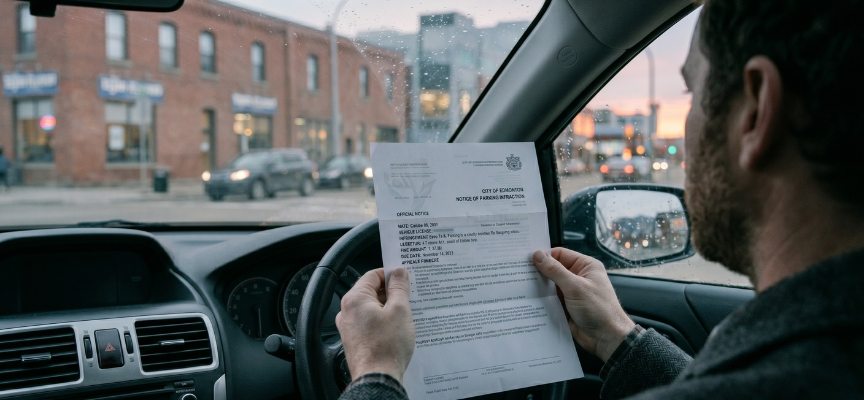
Attendance and the Modern Legal Process
A significant source of stress for those facing license suspensions is the fear of constant court dates. Many worry that fighting the suspension will mean missing work or standing in long lines at the courthouse.
It is important to clarify: defendants do not have to attend docket court appearances. In the administrative system, the review is conducted either through written submissions or via a remote oral hearing.
Your lawyer acts as your representative, handling the complex legal arguments and ensuring your voice is heard without requiring you to step foot in a courtroom for every minor procedural step. This allows you to maintain your daily responsibilities while your legal team focuses on the heavy lifting of the appeal.
Challenging the Evidence
The government relies on the assumption that most people will simply pay the fine and accept the suspension.
By filing an appeal, you are forcing the system to prove its case. This involves a rigorous review of the evidence, where your lawyer might challenge the calibration of a roadside screening device or the timing of the samples taken.
In some cases, the officer’s notes may be contradictory or incomplete. If the “reasonable grounds” for the suspension cannot be substantiated by the documents provided, the adjudicator has the power to cancel the penalty and reinstate your license. This is the goal of every appeal: ensuring that the law was followed to the letter.
About Daryl Royer
Navigating the complexities of Alberta’s administrative penalty system requires a lawyer who understands the nuances of the Provincial Administrative Penalties Act. Daryl Royer is a seasoned Edmonton criminal defence lawyer with a deep commitment to protecting the rights of individuals facing immediate roadside sanctions and license suspensions.
With years of experience challenging the technical evidence used by law enforcement, the team at Daryl Royer provides the strategic, high-caliber representation you need to get back on the road.
If you have been issued an Immediate Roadside Sanction, do not wait for the seven-day window to close. Protect your future and your freedom.
Contact us today for an expert consultation on your license suspension appeal.